A Single Large Pot or Several Small Ones?
Choosing one large pot or several small pots shapes visual weight, rearranging and the mood of a display, helping you plan a planting that suits the space.
Should you choose one large pot or several small pots for your balcony, patio or courtyard? The choice affects more than how many plants you can fit: it changes where the eye rests, how easily the display can move, and whether the planting feels composed or informal. Start with the character of the space and the way you want to use it.
What does one large pot change about a space?
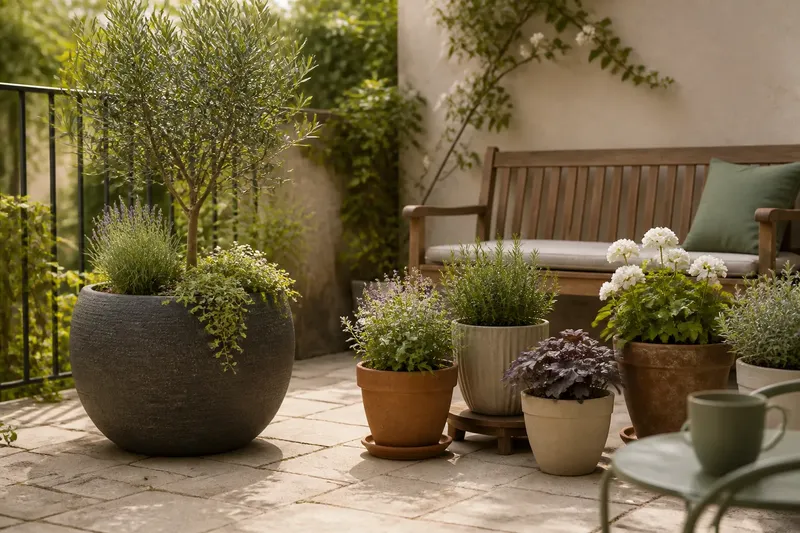
A single substantial pot creates a clear point of attention. Its rim, surface and plant become one visual object, so the eye tends to settle there rather than moving between separate containers. That can give an open corner a sense of purpose, or make a simple planting feel deliberate without filling the surrounding area.
Its visual weight matters even before it is planted. A broad, dark container can feel grounded against a pale wall, while a light-coloured pot with a slender profile may seem quieter. The plant alters that reading: upright leaves add height, and a spreading shape extends the display sideways. Consider the whole silhouette, not just the pot’s diameter.
One pot can also make a small space feel less busy. Instead of several rims, saucers and plant labels competing for attention, there is one main form. This works particularly well where a railing, paving pattern or outdoor table already gives the eye plenty to take in. It is not a way to make every corner look larger, though. A bulky container can dominate a tight setting if there is little room around it.
When do several small pots make a better display?
Several small pots make the planting easier to read as a collection. Repeating a material or colour can give the group a shared character, while differences in height and plant form keep it from looking like a row of identical objects. A cluster can feel relaxed and personal, especially when the pots have been gathered over time.
This arrangement also lets each plant have its own presence. A low herb, a leafy plant and a flowering container can sit near one another without being forced into a single composition. You can leave gaps between them, draw them closer, or put one on a low stand. The display can respond to changing light or to the way you use the space, as long as the pots remain stable and do not obstruct a route.
There is a limit to how much variety helps. A group with many unrelated colours, shapes and finishes can look scattered rather than layered. Repeating one feature, such as terracotta, a rounded shape or a muted colour, gives the eye something to connect. The plants can then supply most of the variation.
Which option is easier to rearrange?
Several small pots are generally easier to rearrange because you can move them one at a time. That gives you more ways to adjust a display as plants grow, light shifts or the furniture changes position. It also lets you bring a container closer for watering or attention without disturbing the whole group.
A large pot is less adaptable once it is filled. The container, compost and plant together may be awkward to lift, so its position deserves thought before planting. If you expect to move it, consider a pot with a suitable base or a wheeled plant caddy, and check that the surface beneath can take the load. Avoid dragging a heavy container across paving, which may scratch the finish or strain the pot.
Say you have a narrow paved courtyard and want a planting near a bench. You could begin with three small pots, then move one aside when the bench is pulled out and bring it back afterwards. If the display’s position stays fixed and you prefer a calmer focal point, one large pot may suit better. The useful question is not which arrangement is more flexible in theory, but how often you expect to change it.
How should you judge the visual weight?
Look at the display from the places where you actually spend time: the doorway, a chair or the kitchen window. A single large container concentrates visual weight in one spot. A group spreads it across a wider area, even if each pot is small. The arrangement’s footprint may matter more than the height of any individual plant.
Compare the pot and plant against their surroundings. A textured wall, patterned paving or dense furniture can make a group of containers feel crowded. Against a plain wall, a small cluster may provide welcome detail. A large pot can anchor an otherwise empty corner, but it may compete with a prominent doorway or a favourite view.
It is not worth buying extra pots just to fill every visible gap. Empty space helps define a display, and a smaller grouping can look more assured than a collection pushed together without a clear reason. If the arrangement feels uncertain, try shifting the pots before adding another one.
What should you consider for planting and care?
A large container gives you room to combine plants only if their needs suit one another. Check that they are compatible in their preferences for light, watering and growing conditions. If they differ sharply, separate pots make care simpler: you can tend each plant according to its needs rather than treating the group as one planting.
Several small containers can dry out at different rates, particularly if they vary in material, plant size or exposure. That means the group may need more individual attention. On the other hand, a struggling plant can be removed without disturbing its neighbours, and one pot can be replaced or refreshed while the others stay in place.
The container’s drainage, material and intended use affect what planting will suit it. Follow the pot maker’s instructions and the plant label, and check any relevant local rules for balconies or shared spaces.
How can you make either arrangement feel intentional?
With one large pot, give the plant enough presence to relate to the container rather than seeming lost inside it. Consider the balance between the pot’s height and breadth and the plant’s outline. A simple surrounding area lets the main form stand out; a nearby chair or wall can help make the placement feel connected to the space.
For several small pots, establish a loose order. You might group them close together, arrange them in a shallow arc, or place one slightly apart as a counterpoint. Varying heights can help, but they need not form a staircase. Let the shapes overlap visually without making access to each pot awkward.
Choose a shared detail rather than making every feature match. Pots in one material can differ in shape, or varied containers can share a restrained colour. This keeps the group coherent without turning it into a display set. Leave a little breathing room around the arrangement so the planting reads as a considered part of the patio, not as storage.
Which choice suits your space best?
Does one large pot make a small patio feel crowded?
It can, particularly when its footprint takes space needed for a chair, doorway or everyday movement. A single pot may instead make a bare corner feel settled if it is placed where it does not interrupt how you use the patio.
Are several small pots better for renters or frequent rearranging?
They often offer more flexibility because you can move them individually and take them with you. Their advantage depends on whether the collection can be kept stable, watered and arranged without making the space feel cluttered.
Can one large pot hold more than one kind of plant?
It can, when the plants suit similar growing conditions and have enough room to develop. If their watering or light needs differ, separate containers are usually easier to manage.
How do you stop a group of small pots looking scattered?
Repeat one feature, such as pot material, colour or shape, and keep the arrangement within a clear area. A few deliberate differences in plant form can add interest without making every container compete for attention.
For a lasting display, choose the arrangement that matches your habits as well as your taste. If you like adjusting plants and furniture, several smaller pots make those changes straightforward; if you want one steady focal point, a substantial container may be the quieter choice. Either way, leave enough space to care for the planting and use the outdoor area comfortably.